Sewer rehabilitation
Sewer systems are subject to high levels of stress. If damage has occurred despite all precautions, targeted rehabilitation is necessary. With adapted technology and extensive experience, we can help with modern solutions.
We call the technique of sealing defective pipe walls or joints using resin-impregnated fabric sleeves the Partliner system. We repair branches and connections using top hat profile technology. We identify damaged areas and the resulting need for rehabilitation using sewer and joint pressure tests in accordance with DIN 1610. We can also carry out this test after rehabilitation has been completed and document the success of the repair. In sewer rehabilitation, we work according to your specifications or the rehabilitation concepts of technically experienced engineering firms. You can rely on the experience of our specialists. Put us to the test.
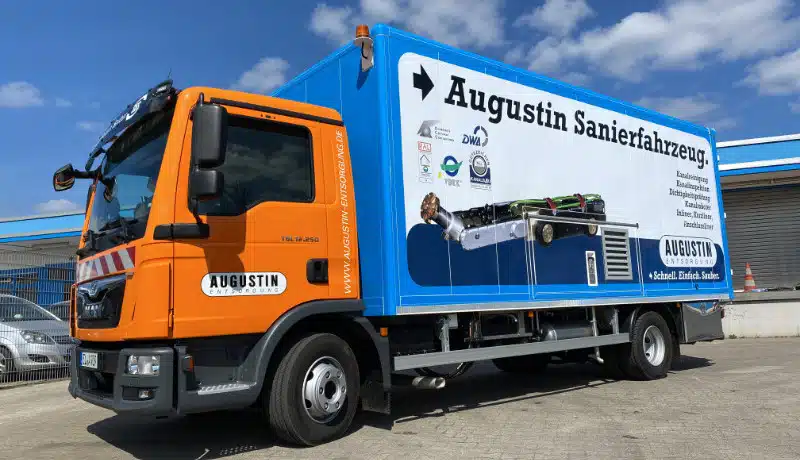
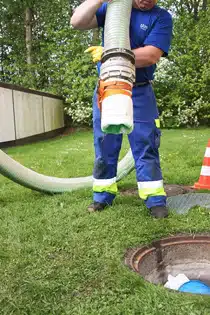
In the field of sewer rehabilitation, we also operate nationwide with box trucks. We rely on the proven technology of JTelectronics from Lindau, paired with robots from Schwalm and M-Tec.
All vehicles are equipped with a sewer inspection system, a sewer cleaning unit, a leak testing system for water and air, and two milling robots each for nominal diameters from DN 150 to DN 800. The robots are operated and controlled via joystick using a digital control system.
Control is linear, meaning the speed and acceleration of the robot react in a direct 1:1 ratio to the joystick position. The robots are equipped with high-resolution color cameras. They feature powerful LED headlights. The camera optics can be cleaned remotely with water via a rinsing device.
The robots remain stable in the sewer pipe without the need for additional bracing or securing. The high dead weight (up to 100.00 kg) and the low center of gravity ensure the robots have good traction. Naturally, the robots are not lowered into the sewer manually, but via an electrically operated cable winch. They are powered by an air motor that reaches up to 13,000 revolutions per minute. A wide variety of tool attachments such as cutters, grinders, chisels, or brushes can be mounted via a universal connection thread. These are used to easily eliminate and remove protruding seals, offset joints, root growth, deposits, and other foreign objects from the sewer.


Excavation of the pipes is not necessary; the damage is repaired partially from the inside using short liners—quickly, easily, and cleanly.
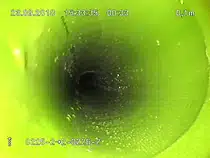
First, the sewer is examined with a camera and the damage is localized. Then the area is cleaned and the wall is roughened with the milling head to create a proper bond between the old pipe and the liner. The pre-cut glass fiber mat (approx. 1,400.00 grams/m2) is impregnated with the specially developed silicate-based resin on the laminating table. The impregnated mat is then fixed onto the rehabilitation packer and transported to the damage site via the manhole or a pipe opening. Once there, the packer is pressurized so that the mat is pressed against the pipe wall. Excess resin is pressed into the damaged area, creating a bond and interlocking with the pipe wall. Depending on the mixing ratio and ambient temperature, the liner is completely cured after 1 to 2 hours and the damage is rehabilitated.
The rehabilitation of connection areas is carried out in a similar way using the so-called top hat profile. After the connection area has been prepared with the milling robot, a resin-impregnated felt hat is transported to the branch and positioned using a special bladder. The top hat profile extends up to 30 cm into the connection pipe, and the hat brim seals the area at the main pipe.
With both top hat profiles and short liners, the cross-section of the pipe is not significantly affected. Accordingly, the hydraulics do not change either. On the contrary, the volume flow improves due to the material properties of the liner. The pipeline remains operational even during the rehabilitation process, as there is an open passage in the center of the rehabilitation packer. All materials used have DIBT approval.
The high standard of our rehabilitation processes is guaranteed through constant internal and external monitoring.
Sewer Rehabilitation Services
- Cleaning and CCTV inspection before and after rehabilitation
- Installation of liners with nominal diameters from DN 70 to 250 mm, including all work protocols
- Installation of short liners or long liners (point repair of damage)
- Lateral connection repair (connection to the main sewer) up to DN 150 mm (hat profile technology)
- CCTV sewer inspection including documentation before and after rehabilitation (videos, images, and reports)
- Preparation of a rehabilitation concept with costs by an expert
- Installation of “Quick Lock” stainless steel sleeves in the main sewer DN 200 to 1700 mm
- “Quick Lock” for use on point damage (partial)
- Leak testing after rehabilitation of pipes with a liner, including documentation
- Milling robot work such as removal of roots, encrustations, protruding connections, etc.
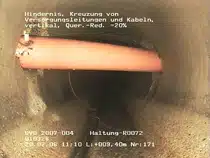
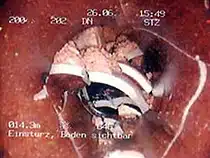
Typical damage in the house connection sewer
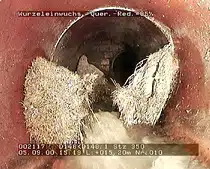
Rehabilitation Methods
Trenchless rehabilitation of house connection sewers
Sewer rehabilitation is divided into three categories:
| Repair | Durability 5-10 years | Partial short liner |
| Renovation | Durability 40-50 years | Liner for the entire sewer |
| Renewal | Durability 80-100 years | New construction |
The decision whether to repair, renovate, or relay depends significantly on the damage found in the sewer. Certified sewer rehabilitation consultants from tkm-Service GmbH will help you decide which method should be used specifically for your house connection sewer.
Short liner, long liner
In the repair process, resin-impregnated glass laminate mats wrapped around a flexible pipe bladder are inserted into the pipe at the point to be rehabilitated. This method is intended for partial rehabilitation. First, the location of the damaged area is determined and precisely measured by a camera inspection in the pipe. The short liner is then manufactured on-site. The glass fiber fabric is laid out and coated with a precisely calculated amount of synthetic resin. The pipe bladder is inserted through the manhole or inspection opening to the defective point in the sewer and inflated, thereby pressing the glass laminate mat all around the pipe wall. After a short time, 50 to 60 minutes, the curing of the resin in combination with the glass fiber laminate creates a structurally self-supporting system that is able to sustainably ensure the structural integrity of the defective pipe. Finally, the pipe bladder is pulled out again and the line can be put back into operation. All work steps are continuously monitored and checked by a CCTV camera during the execution of this rehabilitation process.
Quick-Lock
Quick-Lock® sleeves from DN 200 mm
Defective sewage pipes are often due to inadequate soil compaction and improper laying of the sewage pipes. The tkm rehabilitation team uses permanently elastic Quick-Lock metal sleeves equipped with seals for vertical and radial cracks or offset fractures. Even severe water ingress can be rehabilitated within a few seconds.
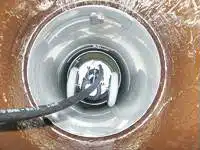
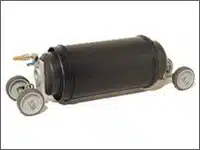
The Quick-Lock stainless steel sleeve is rolled tighter than the pipe to be rehabilitated. The sleeve is surrounded by a seamlessly manufactured EPDM compression seal. Two gear mechanisms integrated into the stainless steel sleeve allow the sleeve to expand by using a Quick-Lock offset packer and prevent the sleeve from slipping back after the optimal compression has been applied by means of a locking mechanism.
The Quick-Lock sleeves are installed using specially developed compressed air-operated packers tailored to the sleeves. The offset packer is positioned at the damaged area via a CCTV or robot system.
Quick-Lock now with structural analysis for Host Pipe Condition II
The Quick-Lock sleeve made of stainless steel and an EPDM compression seal makes it possible. Quick-Lock is the first partial repair process to have a type structural analysis for Host Pipe Condition II (longitudinal cracks and fragmentation).
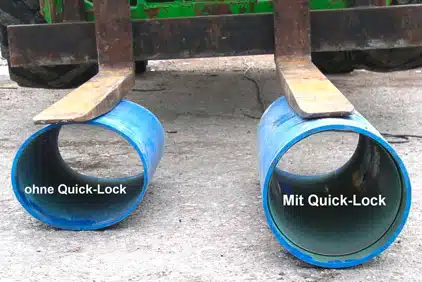
Quick-Lock liner end sleeve for connecting liner systems to pipes and structures
Cured-in-place pipe (CIPP) systems are subject to high quality requirements today. The protection and connection of the liner systems have been neglected until now. The newly developed Quick-Lock liner end sleeve not only seals the annular space between the liner and the old pipe but also protects the liner end from the mechanical influences of high-pressure cleaning.
Functional Principle
The functionality of the liner end sleeve is similar to the proven Quick-Lock system. The EPDM rubber seal was designed so that all common liner wall thicknesses (GRP) can be compensated for in the respective nominal diameter.
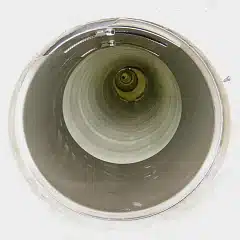
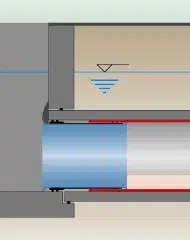
Cured-in-place pipe (CIPP)
The Brawoliner rehabilitation process often makes it possible to avoid costly and long-term earthworks. With the Brawoliner process, not only is a damaged area reliably sealed, but the entire pipe or sewer is renewed at the same time. Thanks to the Brawo laminate, bends of up to 90 degrees can also be sealed without wrinkles. Sewer rehabilitation with Brawoliner also allows for the lining of different pipe diameters, even with dimensional changes within a line (DN 125 to 150 mm and DN 150 to 200 mm).
Procedure
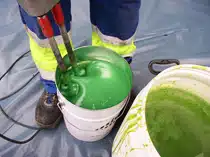
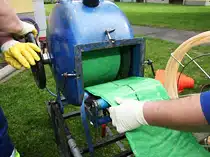
A polyester fiber hose impregnated with synthetic resin (a “liner”) is inverted and expanded into the line using air or water pressure via a pressure drum so that it lies tightly against the pipe wall everywhere and, with professional use and installation, is also largely free of wrinkles. By curing the fast-reacting synthetic resin (resin and hardener) with warm water, the hose becomes a “pipe within a pipe” in a few hours. After the liner has been installed, the inlets are professionally milled open again with the help of a milling robot under camera observation. This is followed by a leak test (see separate chapter). The durability of the CIPP process is between 25 and 60 years.
Brawoliner sewer rehabilitation is the rehabilitation process for sewer pipes and house connection lines when the sewage sewer shows damage over a larger or the entire pipe section. In this process, individual or several consecutive reaches (sewer sections between two manholes) can be processed in one operation. The most typical representatives of renovation processes are the CIPP lining processes.
Augustin Entsorgung Kassel can offer you the Brawoliner rehabilitation process in pipe dimensions from DN 70 to DN 250 mm.
Your advantages with the CIPP process:
- No new sewer needs to be laid under the floor slab and in the garden.
- A long-term, cost-effective rehabilitation process for the renovation.
- The rehabilitation work takes only one day and no dirt is created in the house.
Downpipe rehabilitation inside buildings
Rehabilitation of internal downpipes in buildings using liner technology is now possible!
You are certainly aware of the problem of defective internal downpipes (SW, RW). The cast iron pipes laid in buildings have corroded heavily over the years, and cracks and fragmentation form in the pipes. Damp and wet walls, accompanied by mold growth on the individual floors, are the result. The cause for this is often leaking sewage pipes from which wastewater escapes into the surrounding masonry. Walls have to be laboriously broken open to replace the damaged pipes. High costs—accompanied by dirt, apartment drying, complete renovation, and impairment of the tenants for weeks—are the consequences. These problems are now a thing of the past.
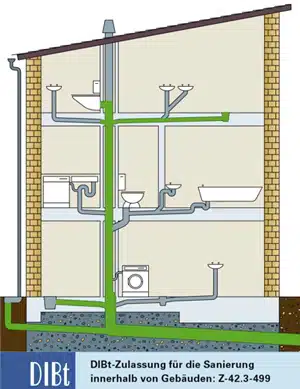
The rehabilitation of the downpipe is carried out in the same way as the rehabilitation of sewage pipes in underground sewers. A polyester fiber hose impregnated with synthetic resin (a “liner”) is inverted and expanded into the line using air or water pressure via a pressure drum so that it lies tightly against the pipe wall everywhere and, with professional use and installation, is also largely free of wrinkles. By curing the fast-reacting synthetic resin (resin and hardener) with hot steam, the hose becomes a “pipe within a pipe” in a few hours. After the liner has been installed, the inlets are professionally milled open again with the help of a milling robot under camera observation.
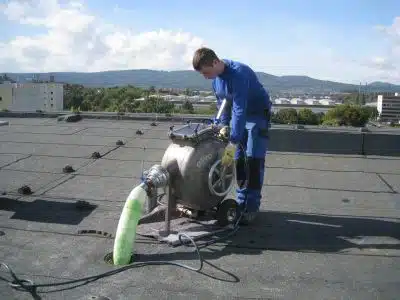
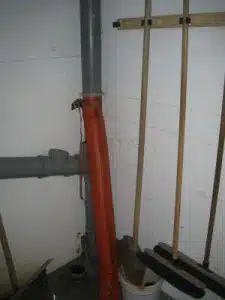
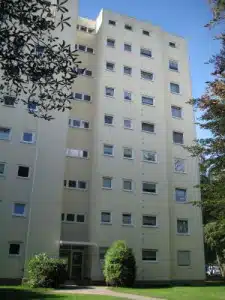
Advantages of liner technology:
- Fast rehabilitation in one day without the nuisance of dirt and noise
- Both existing and potential damage are rehabilitated
- Bends up to 90° and up to 2 dimensional changes possible
- Holistic rehabilitation from DN 50 to DN 200
- Suitable for almost all damage patterns and all pipe materials
- Up to 50% cheaper than open construction
- Durability of over 50 years
Lateral connection rehabilitation
The solution for permanently tight lateral connections
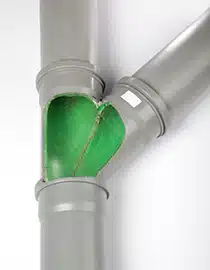
In the damage statistics for sewage sewers, defective lateral connections have ranked at the top of the damage patterns for decades. Damaged connections are not only found in old buildings; improper connections of pipes can also frequently be observed in new buildings. At the latest when the floor slab and the masonry show damp spots or mold and saltpeter form, quick help is required.
The rehabilitation of leaking lateral connections is a major challenge. Inadequate bonding of the connection sleeves, shrinkage of the material during curing, or a lack of resistance to aggressive wastewater can lead to leaks in the new connection. Improperly executed connection rehabilitations in particular have contributed significantly to current quality discussions in sewer rehabilitation.
BRAWOLINER® satellite packers and sleeves
Rehabilitate lateral connections quickly, easily, and affordably!
The rehabilitation of defective lateral connections is a major challenge. BRAWOLINER® offers the custom-fit solution for main pipes from DN 100 to DN 150 and inlets from DN 70 to DN 150. With the new satellite packers and flexible sleeves, even complicated inlets in downpipes can be rehabilitated quickly, affordably, and reliably.
Special packer with satellite bladder
- Custom-fit special packer with approx. 35 cm long, evertible satellite bladder
- Easy insertion and positioning by means of flexible push rods
- The connection shaft of the sleeve is gently inverted
- Rehabilitation with epoxy resin
- Cold or warm curing with steam
- Short curing time for steam curing with the BRAWO SteamBox
- Comparatively cost-effective
Connection sleeve
- Custom-fit connection sleeves
- For main pipes from DN 100 to DN 150 and inlets from DN 70 to DN 150
- All common connection angles and nominal diameter combinations possible
- Flexible, pipe-enclosing brim with approx. 30 cm long connection shaft
- Tight and particularly stable connection
- Ideal in combination with a BRAWOLINER® rehabilitation
The installation
During rehabilitation, a connection sleeve impregnated with epoxy resin is pulled onto the deflated special packer and the approx. 35 cm long, evertible bladder. The brim of the sleeve is inverted into the packer together with the satellite bladder. The packer can be easily inserted and precisely positioned with flexible push rods. The bladder is then inflated using compressed air. In this way, the sleeve fits snugly against the pipe wall and the satellite bladder inverts the connection shaft evenly into the connection pipe. In the process, the joint is passed over without the brim getting caught on it, as often happens during insertion. To shorten the curing time of the resin, the packer can be heated with warm water steam. For this purpose, we recommend the BRAWO Steam-Box, which was specially developed for connection rehabilitation.
Milling robots
MICRO automatic from IMS-Robotics
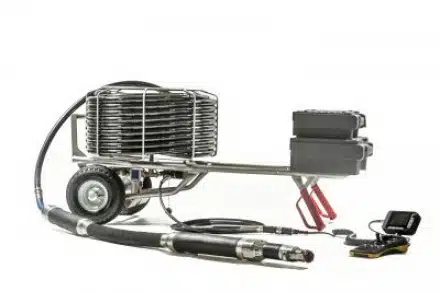
With our new milling robot “MICRO automatic” from IMS-Robotics, we are now able to mill open both the inlets in house connection lines and the vertical floor inlets in downpipe lines after rehabilitation. Its real strength lies in the fact that it can move upwards independently like a caterpillar in a long downpipe using its three bladders to mill open all floor inlets. This unique milling robot has an automatic feed that allows it to mill open the inlet in one operation without having to permanently inflate and deflate the bladders to move it further. In the nominal diameter range from DN 80 to DN 250 mm, it can mill open every inlet in the pipe again, and from DN 100 it even passes through 90° bends without problems, which occurs very often in the house connection area.
Advantages of the Micro robot:
- Use even in demanding pipe situations through manual and automatic crawling and climbing functions
- Pneumatic bracing unit allows use even in vertical pipes
- Milling off protruding connections or seals
- Milling away encrustations and roots in the sewage sewer
- For sewers from DN 100 mm, it is still operational at 90-degree bends
- Permanent observation of the milling process through a color camera with air/water cleaning
- Various milling tools can be mounted
BRAWO® VortexCutter
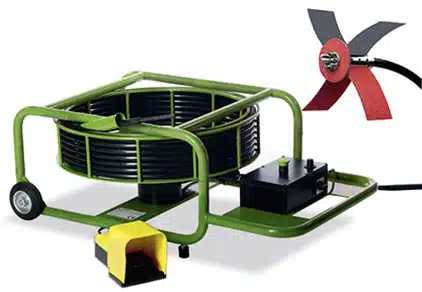
Opening inlets and preparations for lateral connection rehabilitation from DN 50
One of the greatest challenges in the rehabilitation of pipes with bends and dimensional changes is opening the inlets.
With the BRAWO® VortexCutter, inlets from DN 50 to DN 150 can be opened quickly, reliably, and particularly economically at all connection angles.
The cutter consists of a powerful 230V drive unit with a flexible 12 mm shaft and an extensive tool package for nominal diameters DN 50 to DN 150.
Even with bends or dimensional changes, the BRAWO® VortexCutter succeeds in opening an inlet in less than 10 minutes. The low investment costs and the minimal setup and cleaning time also contribute to the particular economic efficiency of the cutter.
Preparing the inlet line for lateral connection rehabilitation can also be carried out easily and reliably with the BRAWO® VortexCutter.
Renewal Process
Renewal is divided into trenchless methods and open construction. The latter is conventional pipeline civil engineering. A distinction can still be made here between renewal with removal of the old line (dismantling the old line, laying a new line) and without removal of the old line (new route).
A new construction of the sewage sewer can be considered in the case of fractures, severe deformations, collapses of the pipe, and severe pipe offsets.
The question of whether rehabilitation can be carried out using open or trenchless methods in individual cases and which solution is more economically favorable (open construction work is often, but not always, more expensive) always requires specialized and certified expertise independent of specific interests! A rule of thumb states that work on house connection lines can usually be carried out using closed construction methods.
Augustin Entsorgung Kassel does not offer sewer renewal. However, we would be happy to advise you on which construction company can perform the work in a qualified manner that will later be recognized by the responsible drainage authorities.